Camel, rust and olive can look entirely at home at work, but the outfit still has to meet the room you are walking into. A rust cotton shirt at a relaxed office and a rust knit under a tailored jacket make different impressions. Warm autumn is a subjective color framework, useful for finding combinations rather than prescribing clothes for a particular face. Start with your actual dress code, then give warm colors a role in pieces you already know how to wear.
Translate warm colors into a real dress code
Look at the clothes people wear for the most formal part of your week. A client meeting may call for a jacket even when the rest of the office wears knitwear. Build that outfit first: warm navy trousers, an ivory shirt and a camel blazer, with plain brown shoes. Warm navy is an informal styling term rather than a standardized shade, so compare the actual fabric with your brown accessories before relying on the name.
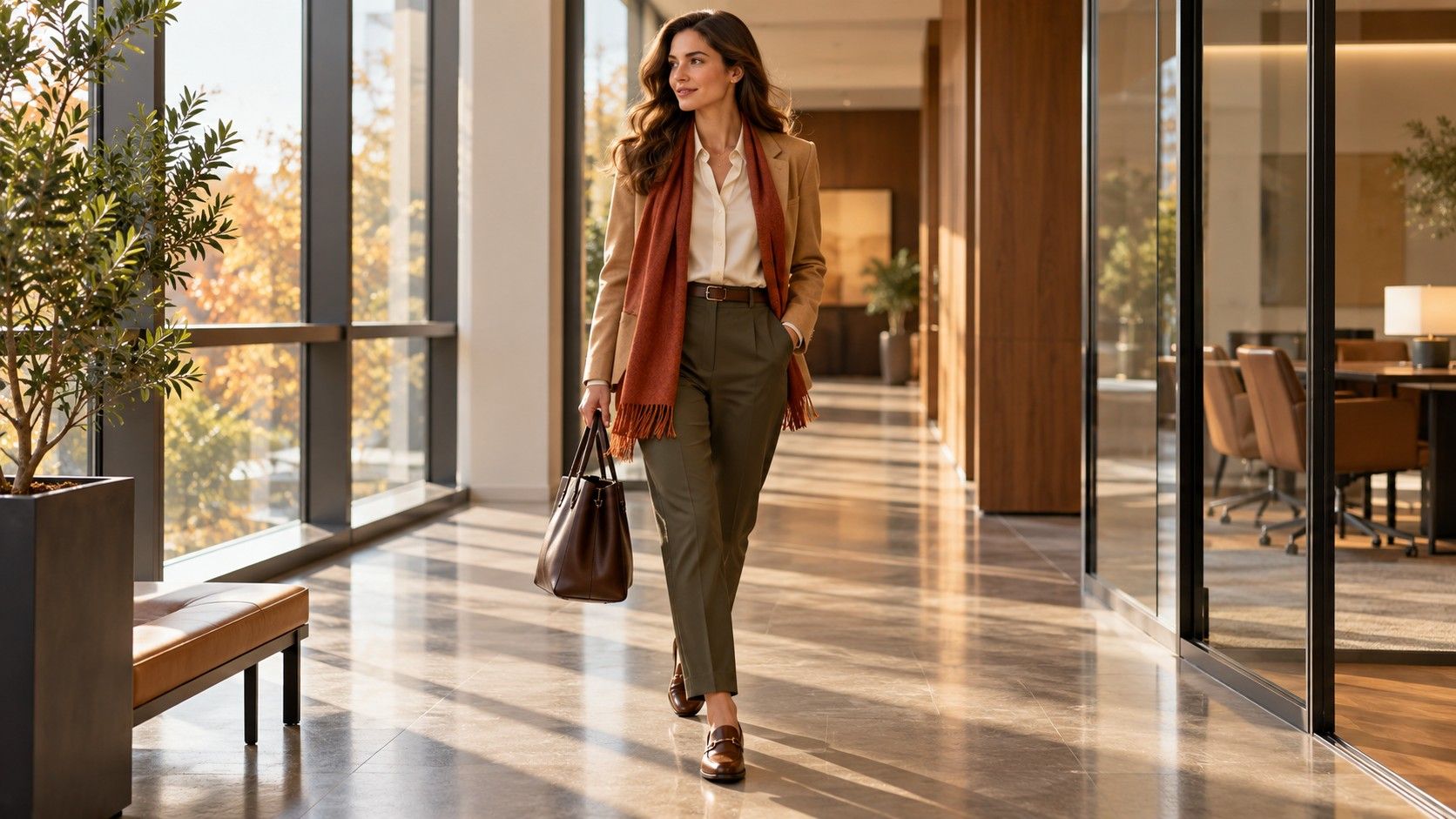
In a more relaxed workplace, olive trousers with a cream knit and a dark brown belt may be enough. Fit, condition and fabric often decide whether this reads as workwear. A smooth knit with tidy cuffs feels different from an oversized, visibly worn sweatshirt in the same color. Check sitting comfort, pockets and whether the top stays in place when reaching for something, especially if you will spend hours at a desk.
The useful way to approach warm autumn color palette clothing for work is to change one part of a dependable outfit. Keep familiar trousers and shoes, then substitute a muted rust blouse for the usual pale blue shirt. Wear the combination with your regular jacket before deciding whether the color feels too noticeable.
For workplaces with uniforms, protective clothing or explicit footwear requirements, build within those limits. A permitted undershirt, cardigan or scarf may be the only flexible piece. There is no need to make every item fit a seasonal category. If your work trousers are black, a camel knit or olive jacket can still introduce the colors you enjoy without creating an entirely separate wardrobe.
Build around camel without a full beige outfit
Camel works best as a useful garment, not as an instruction to dress head to toe in beige. A camel jacket over a warm navy dress is a straightforward meeting outfit. Brown loafers keep the footwear quiet, while the dress creates a clear darker column beneath the jacket. If the jacket is long and loose, compare it with a more defined dress shape so the overall outline does not disappear.
Try camel trousers with an olive shirt for days when a jacket is optional. A darker brown shoe gives the bottom of the outfit some weight, particularly if the trousers are wide. Check the hem while wearing those shoes: fabric dragging at the back will undermine an otherwise neat combination. When the shirt and trousers are both loose, a partial or full tuck can make the proportions easier to read.
Camel varies from pale biscuit to deep golden tan. Hold it beside your own cream shirt and brown shoes in natural light. If the jacket makes the shirt look grey or the shoes look unexpectedly red, decide whether you like the contrast before attempting to match it away. The colors do not have to be identical; they need to feel deliberate enough that you can repeat the outfit without fuss.
A camel cardigan can do much the same work in a casual office. Wear it with a rust shell top and warm navy trousers, leaving enough of the shell visible to separate the cardigan from the waistband. Keep a light layer beneath it if the office temperature changes. A bulky cardigan that will not fit into your coat sleeves may be better kept at work than worn on the commute.
Wear rust in small or large doses
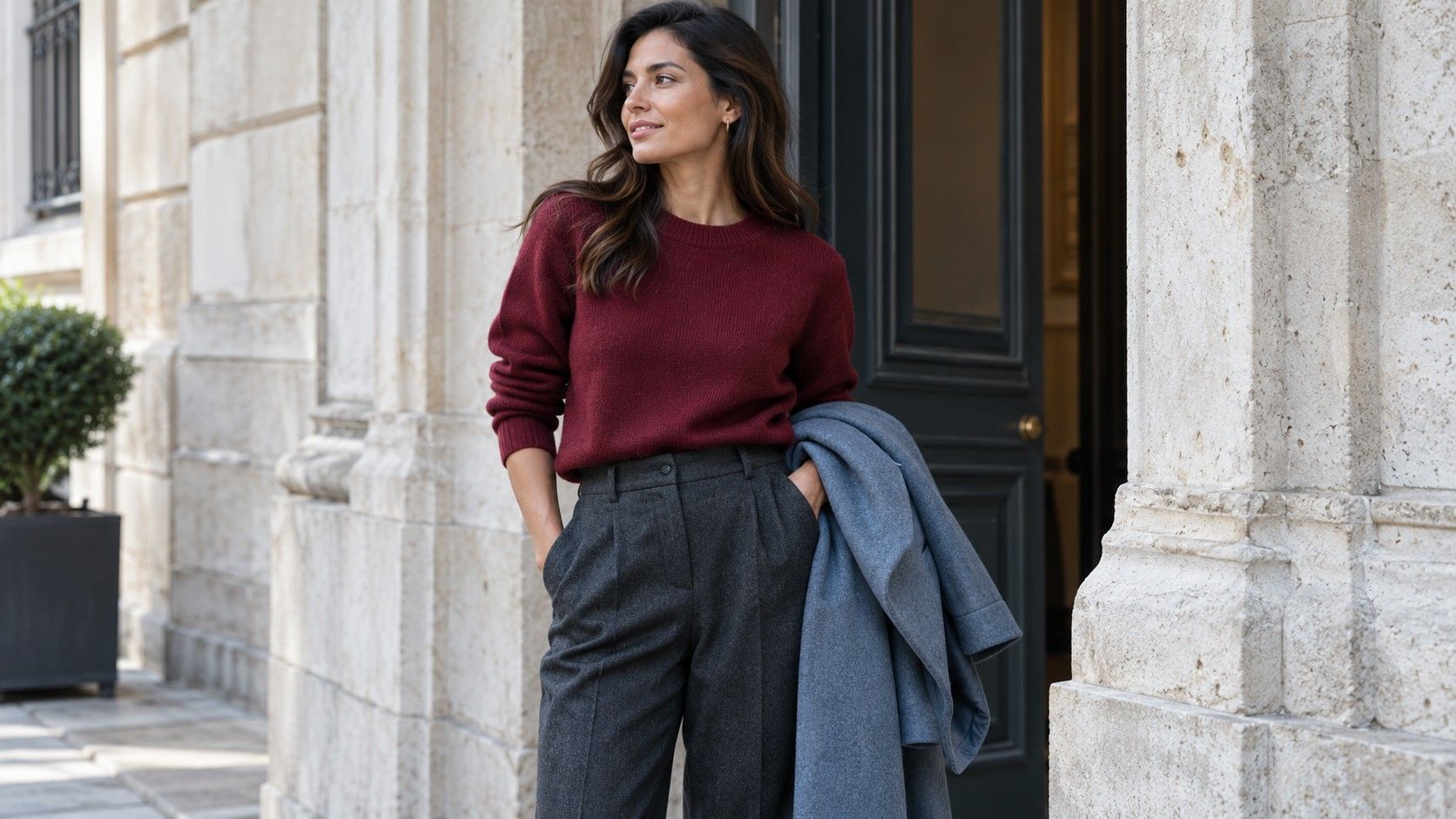
Rust is easy to picture in a weekend jumper and harder to place in a meeting outfit. Control the area of color first. A rust fine knit beneath an espresso blazer shows only a central panel, with dark trousers continuing the quieter frame. For a softer version, use a camel jacket. Compare the combinations with the jacket closed as well as open, because the size of the rust area changes markedly.
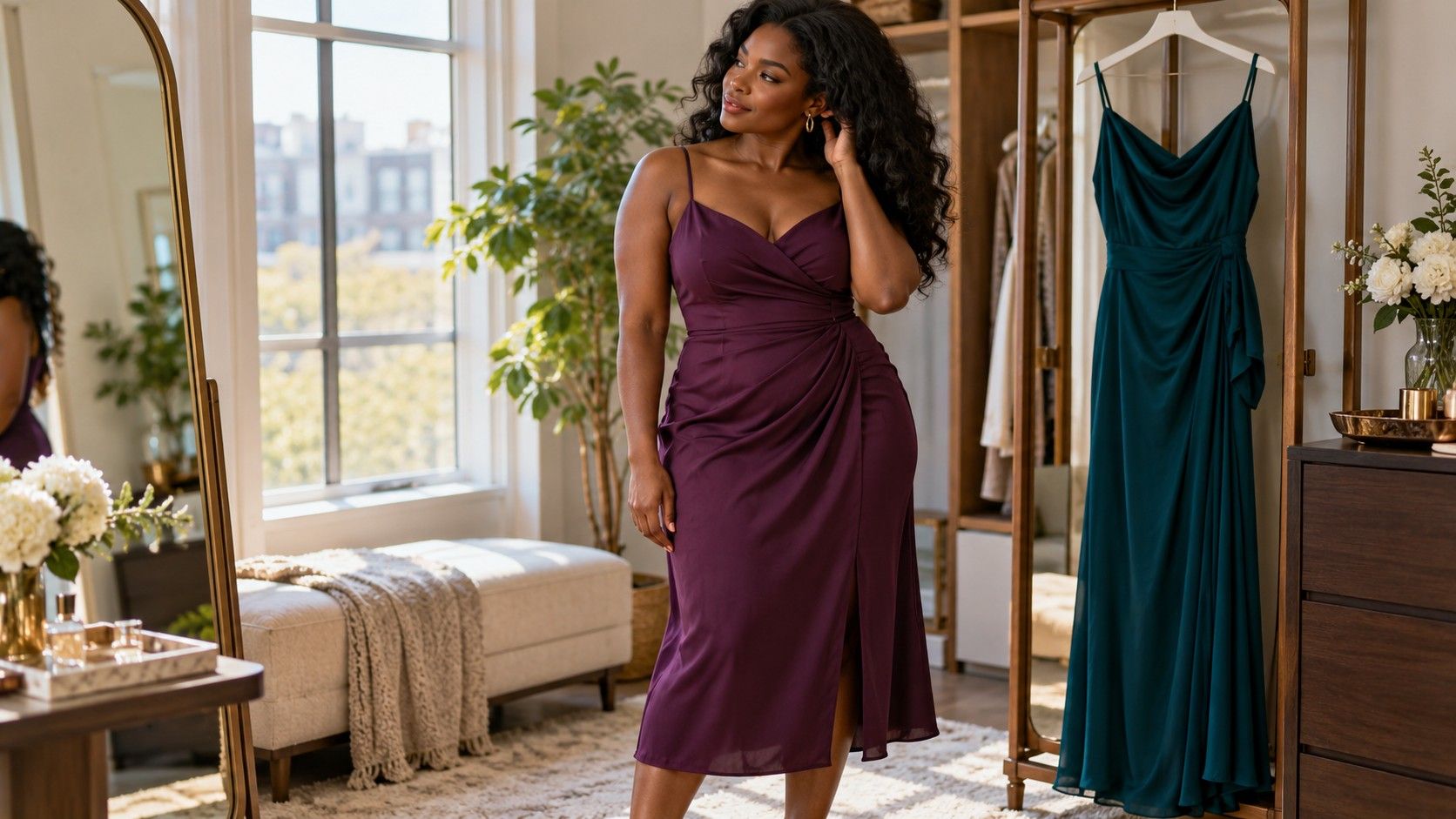
A rust dress can be a practical larger dose when its shape suits the workplace. A simple knee or midi length, sleeves you can work in, and fabric that stays opaque when you sit matter more than finding a theoretically perfect shade. Add a dark brown jacket and shoes for a restrained combination. If the dress already has a busy print, keep the surrounding pieces plain and let the print supply the variation.
For a small trial, wear a rust scarf with a cream shirt and olive trousers, provided scarves suit your role. Check whether it catches on a badge, headset or bag strap. The smallest useful dose may simply be a cardigan visible beneath an open coat.
Rust can look brighter beside very dark navy and quieter beside a medium camel. Neither effect is wrong. If you want a low-key outfit, keep the adjacent colors closer in depth and choose a matte finish. A glossy rust blouse catches more light than a cotton shirt of a similar shade. Compare those finishes under office lighting, especially if the garment also needs to work on video calls.
Choose shirts and layers for olive trousers
Olive trousers are a helpful bridge between autumn color palette clothes and an existing office wardrobe. Start with a cream shirt and brown loafers, then add a camel or espresso layer if you need one. The cream keeps the upper half lighter without requiring a crisp white shirt. With a loose shirt, tuck it in fully for a cleaner line or leave it out only if the hem sits well with the rise of the trousers.
Olive itself can lean grey, yellow or brown. A pair of muted olive trousers may work easily with a pale blue shirt that a seasonal chart would place elsewhere. Test the clothes together before ruling that shirt out. Put the collar near your face, step back to see the whole outfit and consider whether you enjoy the contrast. Individual preference and the actual fabric are more useful here than a categorical rule.
For a warm combination, use an ivory blouse under a rust cardigan with the olive trousers. If the colors seem busy, close the cardigan so the blouse appears only at the neck, or replace the cardigan with dark brown. For a more formal day, an espresso blazer and fine cream knit provide a simple alternative. Keep the trousers the same and let the upper layer change the level of formality.
Check the trousers in motion before treating them as a weekly staple. Sit down, bend your knees and look at the fabric around the pockets. Cotton may crease differently from a fluid tailored fabric, while a narrow leg can catch on boots. Choose the shirt and jacket with that behavior in mind: a crisp cotton trouser and shirt may feel firmer together than you want, whereas a soft knit can make the combination easier to wear.
Plan shoes and weather layers
Shoes can connect several warm outfits without matching every shade exactly. Dark brown loafers work with camel trousers, olive trousers and many warm navy pieces. Try them with the complete outfit and the socks you will actually wear. A large strip of bright sock or exposed ankle changes the visual line, and the shoe that looks right with a cropped trouser may feel awkward beneath a much wider hem.
For a commute in wet weather, choose footwear for grip and comfort first. If your dress code needs different shoes indoors, keep a suitable pair at work or carry them in a separate bag. A brown boot with a lower shaft may fit beneath straight trousers more easily than a wide upper, but check the hem while walking. Do not build a work outfit around footwear that makes the journey difficult.
Your coat needs a trial over the work jacket, not just over a thin top. An olive coat over a camel blazer and warm navy trousers repeats the wardrobe colors while allowing the jacket to remain the lighter piece. An existing black coat also works; a visible cream collar or rust scarf can link it to the outfit beneath. Leave room at the shoulders so the blazer sleeves do not twist or ride up.
Prepare two versions of a good outfit if the weather varies: one with the indoor layer alone and one with coat, bag and practical shoes. A cream shirt, olive trousers and camel cardigan may be enough indoors; add a dark coat and brown boots for the trip. Check that your bag fits over the coat and that the trouser hem clears the ground. These details decide whether a combination gets worn again.
Before expanding your warm color palette clothes, assemble three work outfits from the same small group: navy trousers with a cream shirt and camel jacket; olive trousers with a rust knit and brown shoes; camel trousers with an olive shirt and espresso layer. Photograph the combinations in ordinary light and note any fit or temperature problems. Keep the versions that survive a full working day, then fill an actual gap only when one becomes clear.