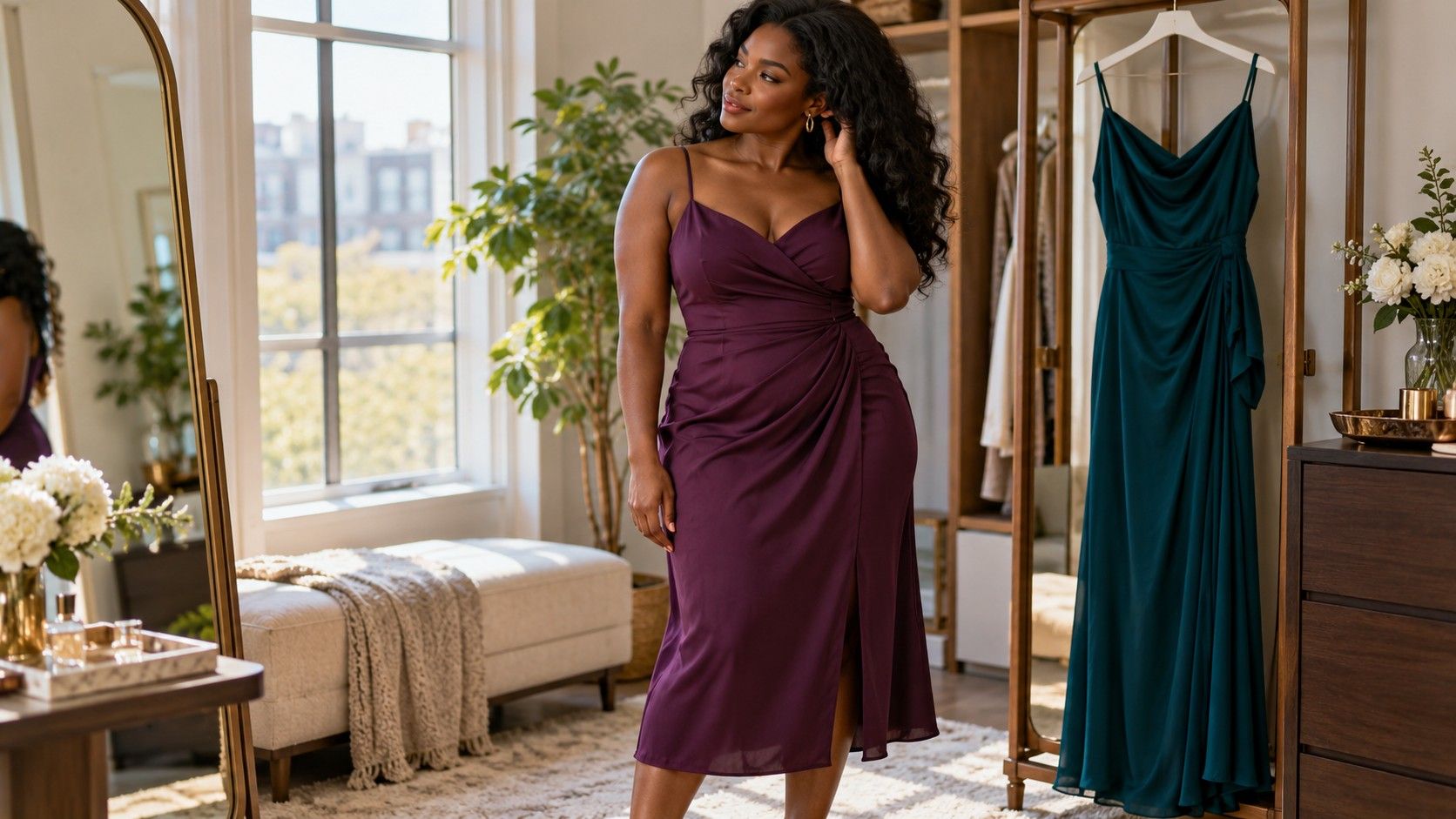
Choosing a dress becomes harder when a color chart treats brown skin as one category with one set of suitable shades. Skin depth, undertone variety and personal taste make that shortcut unhelpful. A cream cotton dress, a cobalt satin dress and an espresso knit dress also ask different things of the rest of an outfit. Start with the occasion and compare real garments; the aim is a dress you enjoy wearing in the room where it will be seen, rather than a color that wins an abstract ranking.
Start with the occasion and the actual dress
A daytime office dress needs to work while you sit, walk and reach, perhaps beneath a jacket. An evening dress may need to handle a long dinner, an outdoor arrival and indoor photographs. Begin with those demands before deciding between blue, green or red. A color can be attractive while the garment itself is wrong for the event, and changing the shade will not solve sleeves that restrict movement or a hem that keeps catching on your shoes.
For a work occasion, try a dark teal midi dress with plain brown shoes and a cream or charcoal jacket. For a relaxed daytime gathering, a terracotta cotton dress with flat sandals offers a different balance of color and texture. Neither is a universal prescription for brown skin. They are workable starting outfits whose success depends on the actual clothes, your preference and the expectations of the occasion.
Try the dress on with the underlayers and shoes you intend to use. The neckline determines how much fabric sits near the face, while sleeves and hem affect how much skin appears beside the color. A high-neck cobalt dress gives blue a much larger role than a strappy version. If you like the color but feel overwhelmed by it, compare a different neckline or an open layer before rejecting blue altogether.
Event requirements come first where they apply. Check any stated dress code and, for a wedding, the couple’s guidance on colors or formality. Plan for the temperature as well: a dress that needs a jacket for the entire evening should be judged with that jacket on.
Compare warm and cool versions of a color
Comparing two versions of one color is more useful than holding up unrelated favorites. Try a tomato red beside a blue-red berry shade, or a yellow-green beside a bluer teal. Keep fabric and depth as similar as possible. If one dress is pale linen and the other dark satin, several differences compete for your attention, and the comparison cannot tell you much about warm and cool color preferences.
Stand near a window with indirect daylight and hold each garment at the neckline. Look at the whole relationship between face and fabric, then try it on properly. You might prefer a softer outline, a stronger contrast or a color that echoes your lipstick; none of those preferences needs to prove an undertone label. If the two options feel equally good, the dress with the better fit has a strong practical advantage.
Brown skin includes a broad range of appearances, so lists of the best clothing colors for brown skin cannot predict an individual result. A warm brick dress might feel easy with your usual brown bag, while a cooler raspberry dress could work better with an existing grey coat. Consider those wardrobe connections as part of the choice. A pleasing color that requires an entirely new set of layers may be less useful than an equally pleasing alternative.
Compare with the hair, makeup and accessories you expect to wear, but avoid changing them repeatedly between dresses. A bright lip on one trial and a bare face on the next makes the decision less clear. If you have no strong preference after a short comparison, stop looking for a hidden correct answer. Comfort, care requirements and how often the dress can be worn are sensible ways to choose between two good colors.
Decide between tonal depth and clear contrast
A dress close to your skin depth can create a quieter, more continuous impression, while a much lighter or darker dress can make a clearer boundary. This describes the visual relationship rather than its quality. An espresso dress may look softly tonal on one person and distinctly contrasting on another. Brown skin tone colors to wear therefore cannot be reduced to a single rule about always choosing bright shades or avoiding brown.
To explore a tonal outfit, try a cocoa dress with a deeper brown shoe and a tan bag. The slight depth changes keep the pieces readable without asking every brown to match. If the dress seems too close to the surrounding accessories, change one finish: smooth shoes beside a ribbed knit dress, for example. A different texture can create separation when an extra color feels unnecessary.
For clear contrast, compare an ivory dress with a deep green one rather than assuming contrast must mean a neon shade. A pale dress can make a pronounced outline; a saturated green can command attention through color intensity. Decide which effect fits the occasion and how visible you want the dress to be. There is no obligation to make your skin appear lighter, brighter or more even through clothing.
Dress proportion changes the result too. A full-length pale dress occupies far more visual space than a pale knee-length dress beneath a dark jacket. If a strong color feels excessive, try reducing its area through a layer or choosing a simpler silhouette. If a muted dress feels too quiet for the event, a more defined shape or one contrasting accessory may give it enough presence without requiring a different dress.
Check sheen lining and venue lighting
Fabric sheen can change the dress more than a small shift in shade. A matte burgundy cotton holds a relatively even color; burgundy satin produces bright highlights and darker folds as you move. Compare both while walking and sitting, not only while standing still. The shinier option may suit an evening occasion, but it will also draw attention to creases and changes in the fabric surface.
Check the lining in daylight with the actual underlayers you plan to wear. A pale dress can look opaque on a hanger yet reveal pocket bags or the outline of underwear when stretched. Stand in front of a light source without staring directly into it, then ask for a normal-distance view or use a mirror. A suitable lining solves a fabric problem; a supposedly flattering color does not.
Look at the dress under more than one available light. Warm indoor lighting may make cream appear yellower and alter the balance of blues and greens. You cannot reproduce every venue exactly, but checking daylight and an ordinary indoor room gives more information than a fitting-room spotlight alone. For an event after dark, the indoor view deserves particular attention because it will occupy most of the evening.
Phone photographs can help compare complete outfits, though automatic exposure and white balance may change the appearance of both skin and fabric. Take the pictures in the same place with the same framing, and treat them as a record of proportion rather than exact color evidence. If flash photography is likely, a quick flash picture can reveal distracting reflections or visible underlayers, but it cannot guarantee how every camera will render the dress.
Finish the outfit without matching everything
Choose the role of the accessories before choosing their exact color. With a cobalt dress, plain dark shoes and a simple bag can let the dress remain the main point of interest. With an espresso dress, a cream bag might provide the contrast you want. There is no requirement for the shoes, bag and jewelry to share one shade, and forcing an almost-match can make the outfit more awkward than an intentional difference.
For a tonal finish, repeat a color family in different depths: a cocoa dress, dark brown sandals and a medium tan bag. For a clearer break, try a deep green dress with black shoes and an existing black jacket. Compare the outfit with the jacket open and closed. The extra dark area changes the balance, particularly when the dress is long or full through the skirt.
Choose jewelry by the effect you enjoy beside the dress, rather than treating metal as an undertone test. A brushed gold earring and a polished silver earring differ in shine as well as color. Try one familiar option first and check whether it competes with the neckline. A dress with a detailed collar may need less around the face than a plain open neckline, regardless of the metal.
Finish by checking the outfit in motion: sit down, take several steps and carry the bag. Confirm that straps stay in place, the hem clears the shoes and the outer layer fits comfortably. Save a full-length photo of a combination that works, with a short note about the occasion. That record gives you a personal collection of dress colors and combinations based on actual wear, rather than another general chart to interpret.