A rail of brown clothes can make a deep autumn wardrobe feel smaller than it needs to be. Espresso is useful, but deep teal, olive and aubergine can do much of the same work while giving an outfit a different mood. Seasonal color analysis is a subjective styling framework, so use the label to suggest comparisons rather than decide what you are allowed to wear. The useful question is whether two actual garments look good together, in the light and proportions in which you will wear them.
Find dark anchors that do not feel flat
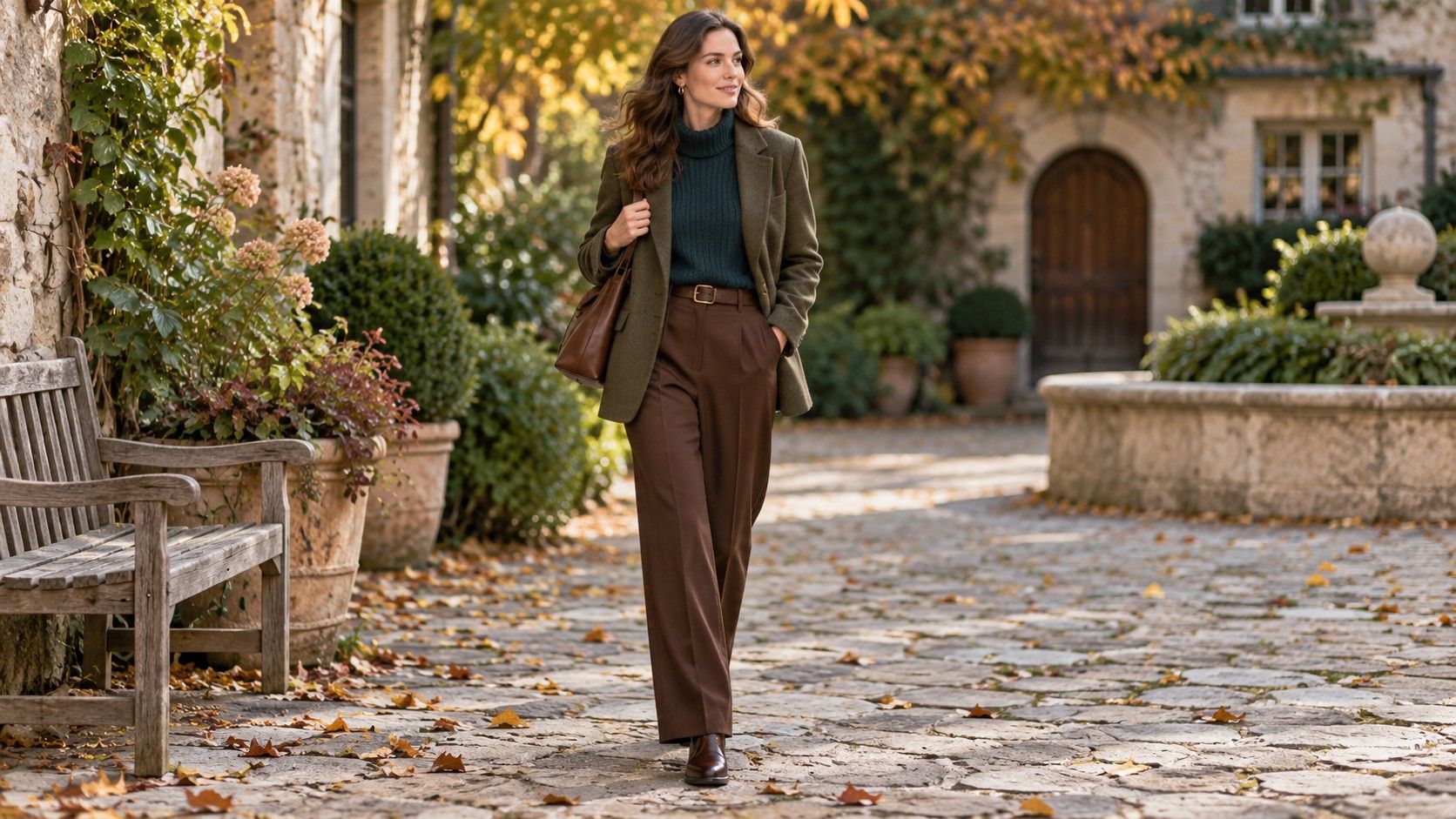
A dark anchor is the piece that gives the rest of the outfit somewhere to settle: trousers, a jacket, a skirt or even a pair of substantial shoes. Start with something already reliable. Espresso straight trousers, for example, can take a moss knit and dark brown loafers for an ordinary working day. The three pieces share a subdued depth without being identical, and a visible shirt collar can add enough separation to keep the upper half readable.
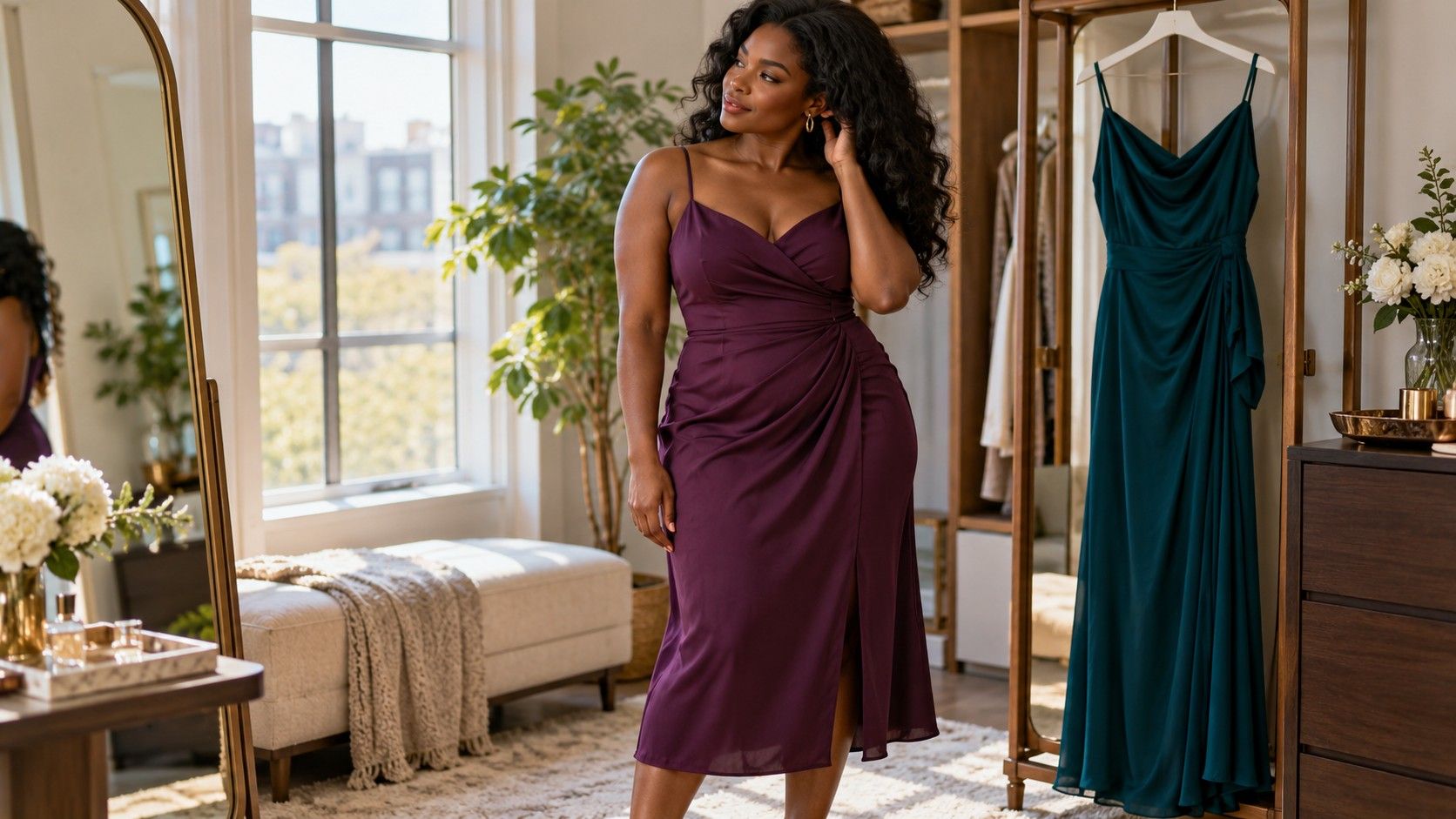
Compare espresso with dark olive and aubergine before deciding that brown must be your main neutral. An olive cotton jacket over an aubergine top and dark denim creates a more varied combination. For a dressier version, use an aubergine skirt, an espresso fine knit and brown ankle boots. These are outfit suggestions, not promises about anyone’s complexion; the cut and finish of your own pieces may change the result considerably.
Dark clothes can look flat when every surface is smooth and every hem meets at the same level. Try a shorter jacket over a longer shirt, or tuck the front of a fine knit into higher trousers. Check the waist and cuff rather than adding another color immediately. A little exposed wrist, a trouser crease or the edge of a lighter collar may supply all the definition the outfit needs.
Before making a new purchase, lay your likely anchors next to the shoes you wear most. A near-black brown trouser can look quite separate from a reddish brown boot. That difference may be attractive, but repeat the reddish tone in a belt or bag if the shoes seem disconnected. Keep the comparison practical: stand back far enough to see the full outfit instead of judging small fabric patches.
Pair deep teal with warm neutrals
Deep teal is a useful escape from an all-brown rail because it can occupy the main area of an outfit without feeling like a tiny accent. Try a teal jumper with espresso trousers and brown boots. A camel coat gives the combination a lighter outside layer; a dark olive coat produces a quieter result. Compare both with the jumper on, because a coat that looks warm alone may seem much yellower against teal.
For a less formal day, pair a teal shirt with olive chinos and dark brown trainers. Leave the shirt untucked if its hem and the trouser rise work together; otherwise, a loose tuck can stop the body from becoming one long block. If the shirt is soft and flowing, choose a firmer trouser fabric. If it is crisp cotton, a softer pair of trousers may make the combination feel less uniform.
When browsing deep autumn color palette clothing ideas, teal is often presented as one fixed shade. Actual clothes range from greenish petrol to blue-heavy peacock tones, and their names are inconsistent. Put the garment beside an espresso piece you know, then beside your olive or camel layer. Choose the version that makes those pairings easy rather than trusting a color name on a label.
Keep the first trial to teal plus one main neutral. A teal dress, espresso belt and brown boots is already a complete combination. Add aubergine only if there is a clear reason, such as a cardigan you need indoors. Too many small color changes can make an otherwise simple outfit harder to repeat, particularly when each accessory introduces another shade of brown.
Use pale pieces without breaking the outfit
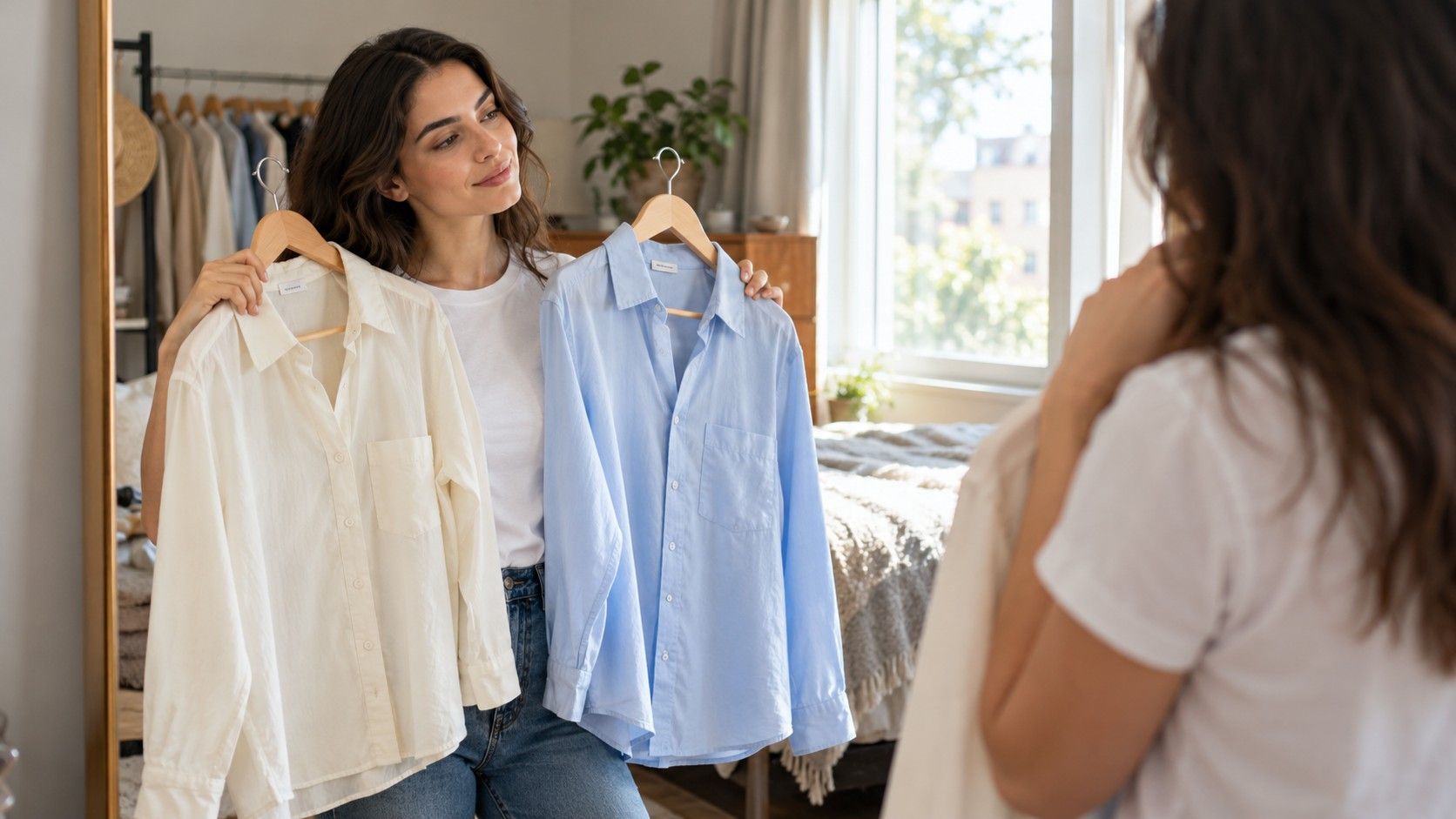
Pale pieces can provide breathing room among deep autumn clothes. They do not have to disappear from the wardrobe because a palette chart emphasizes dark shades. An ecru shirt under a deep teal cardigan, with espresso trousers, creates a clear light area near the face and a dark frame around it. Button the cardigan differently to compare a narrow strip of shirt with a wider, brighter opening.
Try pale clothes on the lower half too. Cream jeans with an aubergine knit and brown boots can feel lighter than the same knit with dark denim. The boots carry some of the dark color downwards, while the trousers give the sweater space. Check whether the cream fabric becomes transparent or shows pocket bags in daylight; that practical issue matters more than its exact seasonal category.
A stark white shirt may create more contrast than you want, but its effect depends on how much of it shows. Keep a familiar white shirt and test it beneath an espresso crew-neck, leaving just the collar and cuffs visible. For a stronger contrast, wear it open at the neck under a dark olive blazer. Neither version needs replacing simply because ivory appears on a suggested palette.
If a pale top seems isolated, repeat a small light detail elsewhere: an ecru stripe in a scarf, a pale sole, or a bag already trimmed in cream. Avoid buying a matching accessory solely to complete the idea. Often changing the outer layer from black to olive makes the pale piece belong. Look at the complete outfit beside a window, then check it under the indoor lighting where it will actually be worn.
Choose texture for rich color
Rich color depends partly on the material carrying it. Espresso velvet, espresso cotton and espresso wool can read as three different depths, even when their labels agree. Velvet catches light in bands; washed cotton often appears softer; a smooth wool trouser can look more even. Use those differences deliberately when wearing close colors, instead of expecting every brown to match exactly.
For an easy textured outfit, combine olive corduroy trousers with a fine espresso knit and smooth brown shoes. The ridges distinguish the trousers from the upper half without requiring a pale shirt. If both trousers and jumper are bulky, adjust the proportions: a shorter knit or a cleaner tuck can keep the waist visible. Choose a coat with enough room that the sleeves do not bunch underneath it.
Aubergine in a satin skirt makes a different statement from aubergine in a brushed sweatshirt. To quiet the skirt, add a matte espresso jumper and simple boots. To sharpen the sweatshirt, use straight dark trousers and a structured olive jacket. The contrast in finish often does more than an extra accessory. Check shiny fabrics in movement, since a still mirror view can miss bright highlights.
Consider maintenance while building combinations. A textured knit that catches on a bag strap, a velvet cuff that attracts lint, or a satin skirt that needs particular underwear may become an occasional piece. Build everyday outfits around fabrics you can manage on an ordinary morning. Save a photo of the successful combination and note the useful detail, such as thin knit under jacket, rather than documenting a theoretical perfect palette.
Make black pieces work with the wardrobe
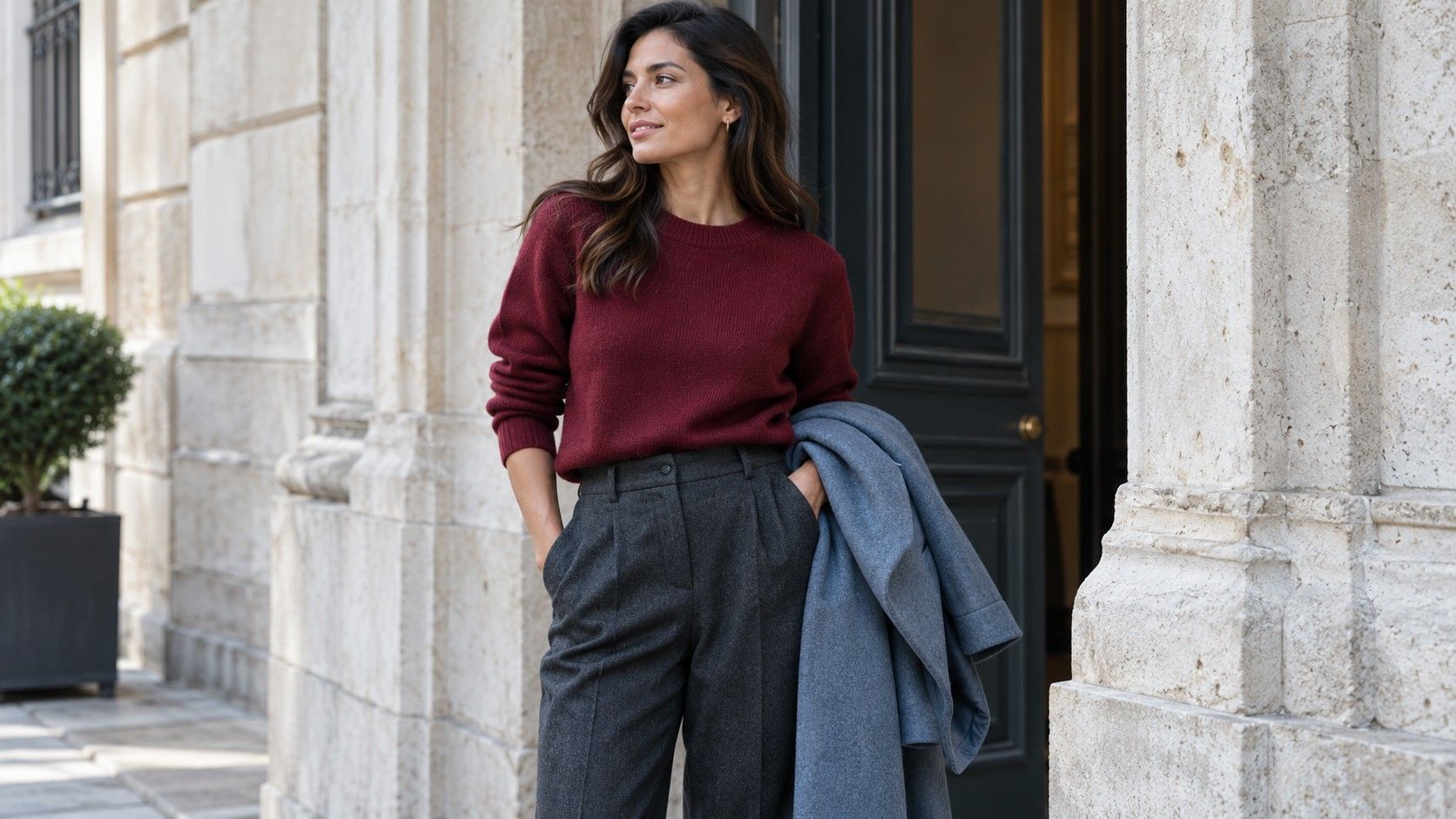
Black can stay, especially when it already accounts for your best trousers, boots or coat. Seasonal suggestions are not a reason to replace useful clothes. Start with black trousers, a deep teal top and an olive jacket. The trousers provide a dark foundation while the upper pieces bring color. If the result feels too stark, compare an espresso top before changing the trousers themselves.
Black boots can sit naturally below an aubergine dress with a black belt or dark tights. The repeated black gives the shoes a visible relationship to the rest of the outfit. With bare legs, the boots may become a stronger endpoint; a longer hem can alter that balance. Choose according to the occasion and weather rather than trying to correct every contrast a palette chart might discourage.
When a black coat seems severe over camel, try putting deep teal or aubergine between them. A dark scarf can reduce the size of the camel area near the collar, but first test the coat open and closed. The outfit may work perfectly open and feel different once the front becomes one black panel. Your outdoor version deserves its own mirror check, especially if the coat will stay on for most of the day.
A small repeatable wardrobe might use espresso trousers, olive trousers, dark denim, a teal knit, an aubergine top and a pale shirt alongside existing black shoes and outerwear. Test each top with two bottoms before adding anything else. Keep the combinations you enjoy wearing, even when they cross seasonal boundaries. The point of warm depth as a styling idea is to make getting dressed easier, with enough variation that brown remains a choice rather than the whole wardrobe.