Green trousers can look easy beside one sweater and strangely unsettled beside another. The explanation often lies in the green itself: olive, emerald, sage and forest green differ in warmth, lightness and intensity. Before adding a second color, look at the garment you actually own in daylight. Then choose whether the outfit needs a quiet background, a lighter break or a small contrasting detail. That decision is more useful than a single list of colors said to match every green.
Identify your green before building the outfit
If you are asking what colours go with green clothes, start by putting the green piece beside something plain and familiar, such as a white shirt or gray trousers. Olive often has a yellow or brown cast; emerald usually looks clearer and more saturated; sage appears softer and often grayer. Forest green is generally deep, though individual garments can lean noticeably blue or yellow.
Check lightness separately from the color name. A very dark green coat may sit close to navy or black in value, while a pale sage blouse creates a much lighter area. The coat may need a lighter scarf to show the layers clearly. The blouse might need medium gray trousers or darker denim to give it a defined partner.
Surface also changes the way green behaves. A brushed olive sweater looks softer than a smooth olive raincoat, and an emerald satin skirt catches light across its folds. Hold the piece upright rather than flat on a bed, then compare it with a possible partner. Let the fabric fall naturally. A shiny garment may become the center of attention even when its shade is fairly dark.
Choose one starting partner and keep the rest of the outfit quiet for the first comparison. With green trousers, try a cream top and then a gray top, leaving the same shoes in place. With a green jacket, use the same jeans and change only the inner layer. Small controlled changes make it easier to see whether the issue is warmth, contrast, proportion or simply a combination you do not enjoy.
Let olive work with the neutrals you own
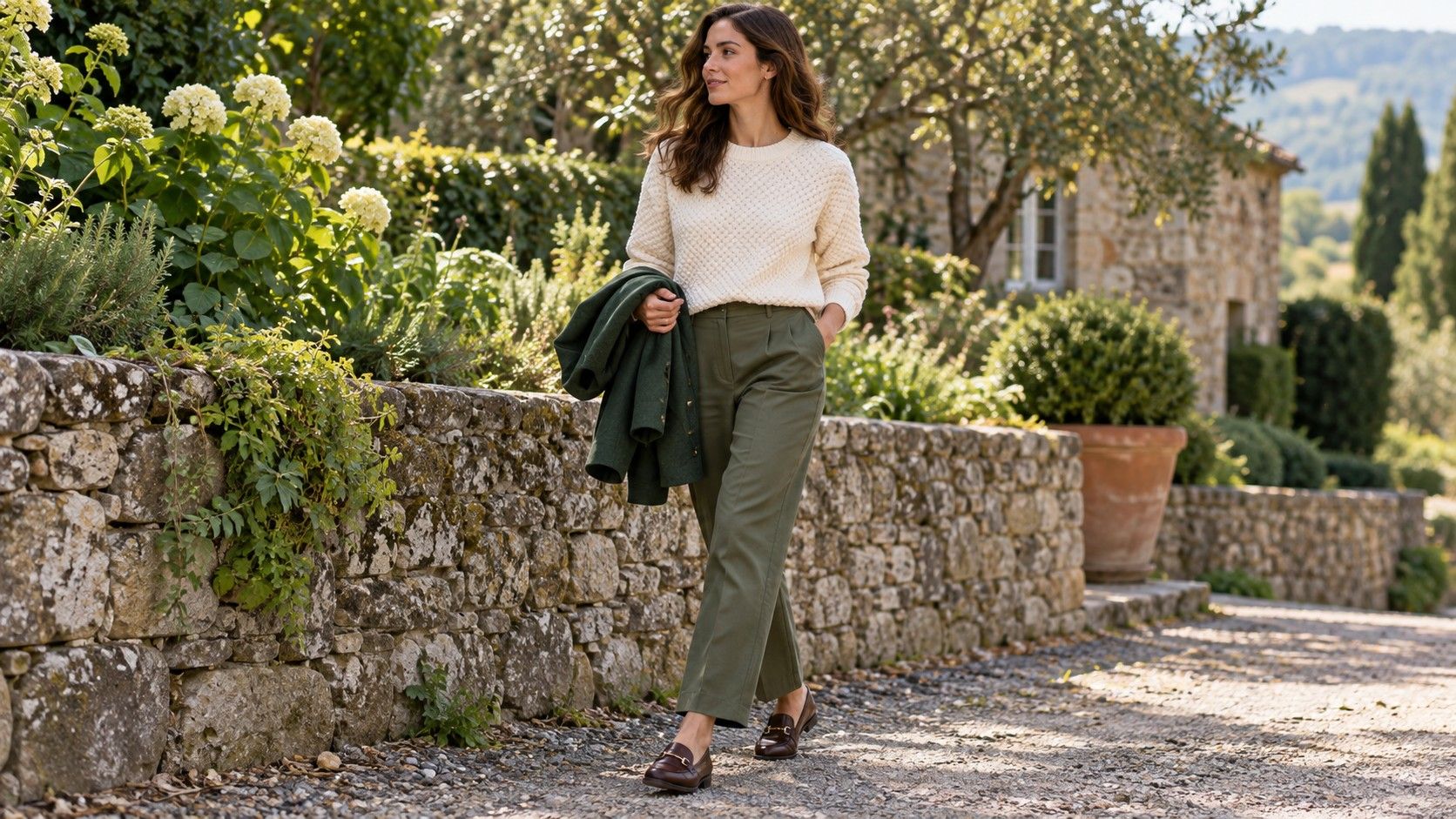
Olive and cream create a useful starting point for everyday outfits. An olive trouser with a cream knit has a clear light-dark difference without needing a bright accent. Brown shoes can continue the warm impression, while gray shoes may make it quieter. Compare both if you have them. The precise brown matters: a very orange leather can become a stronger feature than a muted dark brown.
For a cooler combination, try olive with gray or navy. An olive overshirt over a gray T-shirt and blue jeans keeps each area readable. A navy sweater with olive trousers produces a darker result; a pale shirt collar or a little lighter fabric at the hem can break up the two deep areas. Keep that addition small if you want the outfit to remain subdued.
Beige is less automatic than it sounds. Yellow-beige trousers may sit comfortably beside a warm olive jacket, while a pinkish beige can create a more noticeable difference. Put the actual fabrics side by side near a window. If the combination feels uncertain, separate them with a cream shirt or swap one beige piece for denim.
Use the olive garment according to its practical role. A weatherproof coat needs to work over several outfits, so check it with the jeans, work trousers and shoes you wear most. A pair of olive shorts allows a lighter summer combination with a pale shirt. Scale the color decisions to the situation: the coat may dominate the whole silhouette, while the shorts share attention with much more visible skin and footwear.
| Green piece | First partner to try | Alternative effect | Useful check |
|---|---|---|---|
| Olive trousers | Cream knit | Navy top for a deeper combination | Keep the waist and layers visible |
| Emerald skirt | Charcoal blouse | Soft white shirt for stronger contrast | Compare the skirt in motion if it is shiny |
| Forest green coat | Medium gray scarf | Pale blue neckline for a lighter break | Look at the coat open and closed |
| Sage shirt | Medium blue denim | Pearl gray trousers for a softer outfit | Check whether the pale layers merge |
Give emerald and forest green a clear partner
Emerald often has enough intensity to carry an outfit without another strong color. Try an emerald blouse with charcoal trousers and simple dark shoes. Charcoal gives the green a clear boundary while leaving it prominent. A soft white trouser or skirt produces a much sharper difference in lightness. Neither pairing is universally better; choose between a deeper composition and a brighter, more separated one.
With an emerald skirt, look at how much green remains visible beneath the top. A long oversized sweater may hide most of the skirt and leave only a narrow bright band. A shorter or tucked top reveals a larger area and makes the skirt the main feature. Check the combination while standing and sitting. The proportions may explain an awkward impression more clearly than changing the blouse color.
Forest green can behave almost like a dark neutral. A forest sweater with medium gray trousers offers a readable distinction, while black trousers create a more continuous dark outfit. Texture helps the latter: a ribbed knit and smooth trousers separate more clearly than two flat fabrics. A pale blue shirt at the collar can add definition if the dark layers feel too closed in.
Brown is another useful partner for deep green, provided you like the relationship between the exact shades. A cool forest coat and a muted brown scarf may feel quieter than the same coat with a golden tan scarf. View the scarf close to the collar, where it will actually sit. A small brown accessory below the waist can have a very different effect from a large warm area beside the face.
Give sage enough definition to stay visible
Sage and pale gray can make a gentle combination, but similar lightness sometimes causes the shapes to merge. With a sage blouse and gray trousers, show the waistband or choose a top with a clearer hem. A medium gray belt can mark the boundary without introducing a dramatic new color. If you prefer a loose silhouette, try a slightly darker trouser instead of forcing a tuck that feels uncomfortable.
Denim offers an easy alternative. A sage shirt over medium blue jeans keeps the green soft while giving it a distinct base. Pale denim creates a lighter overall effect; dark denim gives a stronger contrast. Try the washes you already own with the same shirt styling and shoes. Changing the denim and every accessory at once makes the comparison harder to read.
White can freshen the combination, though a crisp white may look quite bright beside a grayish sage. Compare it with a softer white or cream if one is available. A sage cardigan over a white top also changes according to how far the cardigan is open. A narrow light center may feel balanced where a large block of white becomes the dominant feature.
A dusty pink detail can add interest to sage without making the outfit very vivid. Keep the scale small at first: a scarf, a visible shirt collar or a pattern containing both shades. If you prefer a quieter look, try gray or brown accessories instead.
Control pink, red and purple through proportion
Contrasting colors can work beautifully with green, but their amount matters. Pink or red can act as a complementary accent in an outfit, creating a noticeable contrast against many greens. The exact hue and intensity change the effect, so treat the color-wheel idea as a prompt for testing. An olive jacket with a dusty rose scarf feels different from emerald trousers with a clear red blouse.
Start with one small area. A burgundy bag beside an olive coat introduces a deep red note without dividing the outfit into equal blocks. Pale pink under a forest cardigan can provide a light center as well as a color contrast. If you like the relationship, show more of the accent. If it feels busy, reduce its coverage or remove another accessory before deciding the colors cannot work together.
Purple also deserves an exact garment comparison. A muted plum knit can sit comfortably with olive trousers, while a clear violet top creates a stronger pairing with emerald. Keep shoes and bags simple while testing this combination. The green and purple already supply two points of attention, and a third vivid accessory can make it difficult to tell what is causing the outfit to feel crowded.
Finish under ordinary conditions: the jacket on, the bag where you carry it, and the shoes suitable for the journey. Check the colors in indirect natural light, then in a normal indoor room. Phone photographs can help record proportions but may shift shades through automatic white balance. Save the combination that works with its useful detail included, whether that is an open collar, a smaller scarf or a quieter shoe. That complete outfit gives you a dependable starting point next time.